On Fundamental Considerations of a Universal Language
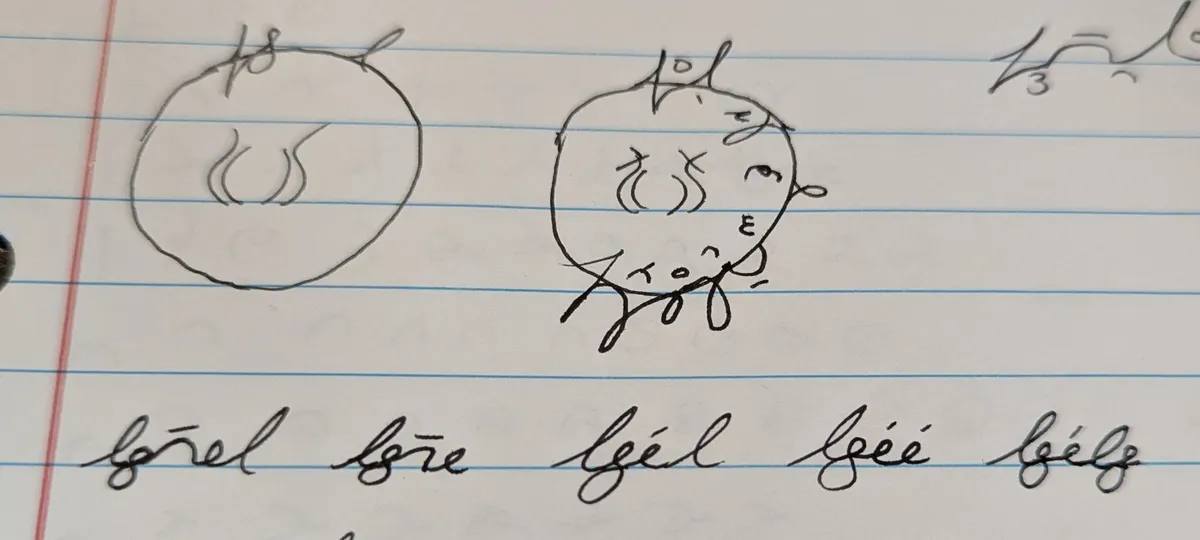 Suppose we were to consider development of a universal language, one which would be approachable to and actively utilized by most or all of the world's nations.
What are some of the primary motivations and considerations that would distinguish such a language, and elevate it to one worthy of global adoption? I posit that the following would endear leaders to its construction:
Key Qualities
1. Ease of Learning
A universal language should be approachable for anyone who seeks to learn it, no matter their linguistic background or level of education. Therefore, said language must uphold a sacred commitment to consistent pronunciation and intuitive syntax.
2. Clarity and Precision
Any language which seeks to foster unity between diverse peoples must not leave space for ambiguity or misinterpretation. As such, the phonetics and grammar must be as close as reasonably possible to crystal-clear. If two groups of different natural language, different culture, and different priorities seek to understand each other, let no nuance or pronunciation struggle contribute to conflict.
3. Acceptance of Limitations
A hypothetical universal language must not seek to replace the natural languages, but rather create a shared space of reasoning and communicating across barriers physical and metaphorical. In its acceptance, such a language could lean on its strengths: clarity and scientific / academic adaptability.
This language, by design, should not be anyone's first language. The natural languages are the custodians of hundreds or thousands of years of culture and history of a civilization. Let poetry and prose and storytelling remain the domain of the natural languages; so that in our collective progress as a species, we never forget our roots nor our connection to those who lived before us.
4. Intentional Thought-Patterning
It is known that the language one thinks in will operate as the lens through which one perceives and interprets their world. If one sought to build a universal language, what sort of lens would we desire a speaker to "see" through?
Humanity's understanding of the world around them is shaped by an object-centric thinking. Everything is an object, an absolute and discrete thing whose identity is defined by its various attributes. Consequently, an object's difference from a similar object is considered derivative, an extraction from the attributes of identity.
Philosopher Gilles Deleuze (1925 - 1995) proposed that we have this backwards - that difference is the first and foremost descriptor of a thing, and identity is derivative. If the idea seems counterintuitive, consider that the way we identify anything around us is based on differences.
If you were to walk around a bookstore, how might you identify when the product on a shelf is a board game, rather than another book? Must you find a label that says "board game?" Of course not. It is enough to note its differences from what you already know to be books. It is in a box (unlike the books), it is larger (than the books), and if we get a little closer we might see that it includes custom dice and humanoid pieces (so this is decidedly not a box set of books). You see, it is not the identity which tells us the differences, but rather the differences (shape, size, and myriad other attributes) which inform us of identity.
In light of this view, and because a universal language would be the primary communicator of science for multinational collaboration, said language would be more philosophically aligned with structural realism and post-structuralism - both of which support metaphysics adaptable to concepts of contemporary science like spacetime theory, quantum mechanics and statistics, and the pursuit of a Theory of Everything.
5. Lean on Lessons Learned
Did you know that in Mandarin Chinese, there is more than one way to say "us" or "we?" The word 我们 means "we," but 咱们 means "we, including you (the person I am speaking to)." How many awkward moments could be avoided in English by clearly indicating when the addressee is or is not included in upcoming plans?
Did you also know that pronunciation in Spanish is almost entirely consistent? A person could learn to pronounce the sounds of Spanish in an afternoon, then accurately and clearly read a newspaper aloud. They might not understand a word of it, but every syllable is spoken correctly. Now consider teaching a new learner of English the rules of pronouncing "tough," "trough," "thought," "though," and "through."
A language built from scratch can incorporate the strengths of existing languages, and omit the things that limit them or introduce ambiguity.